
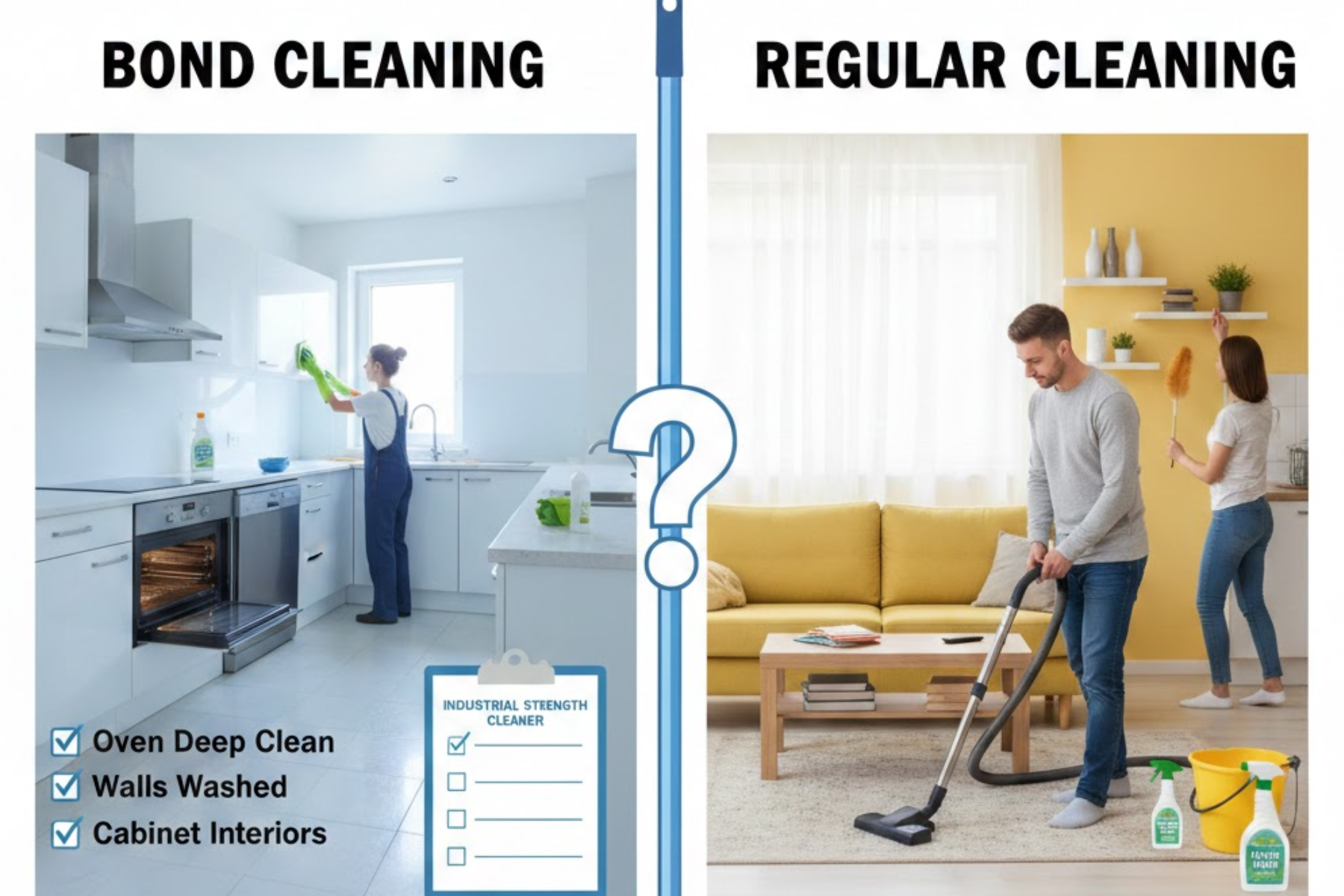
Bond Cleaning vs. Regular Cleaning: What’s the Difference?
Whether you are about to vacate a rental property or you just want to ensure that your home is always kept spotless, chances are you will have come across two regular services that are available: bond cleaning and regular cleaning. They may sound the same, but they are very different in purpose — and knowing the difference is important.
A lot of renters think a standard clean is enough to ace that final inspection. This unfortunate and common misconception results in failed inspections, lost bond monies, and unnecessary extra cleaning fees.
In this epic guide, we’ll break it down:
- What bond cleaning really involves
- How regular cleaning differs
- What landlords and property managers are looking for
- Cost and time comparisons
- What’s best for your scenario
By the end, you should have a good sense of which service is right for you — and why it matters to get this one right.
What Is Bond Cleaning?
What even is bond cleaning? Bond cleaning – sometimes called end of lease cleaning, move-out, or bond back cleaning – is a thorough bottom-to-top deep clean of a property when one tenant moves out.
Its primary goal is simple:
To bring the property up to scratch for final inspection so that you can get back your full bond deposit.
Bond cleaning is not your usual regular clean; it’s not about maintenance. This kind of cleaning helps in bringing back that freshness to your property when you first moved in.
Professional companies like Real Bond Cleaning specialize in a condition level of cleaning that satisfies Australian real estate standards, which allows renters to mitigate the risk of bond deduction.
What Does “Bond” Mean In Bond Cleaning And Why Is It Called That Way?
Most lease agreements require tenants to pay some kind of security bond at the start of their lease. It acts as security for the landlord in case of any property damage, unpaid rent, or cleaning charges.
The property must be returned in the condition it was in at the commencement of the lease (except for fair wear and tear). If the property does not pass inspection because of the level of cleanliness, landlords can take cleaning fees out of your bond.
This is where bond cleaning services come into play.
When Is Bond Cleaning Required?
Bond cleaning is typically required:
- At the end of a lease term
- Before the final inspection
- When handing back keys
- Only if it is in your lease
- When selling a tenanted property
Some estate agencies do stipulate professional cleaning with receipts. The others are looking to ensure the house meets a high standard of cleanliness.
Remember to check your lease before jumping to conclusions.
What’s Included in Bond Cleaning?
Bond cleaning is many levels above routine cleaning. It is everywhere there is an open surface, and it often follows a checklist from a property manager.
What’s generally included is broken down below:
Typical tasks include:
Deep oven cleaning: (inside, trays, racks , and glass door)
Rangehood filter degreasing
- Cooktop detailing
- Cleaning inside cupboards and drawers
- Splashback scrubbing
- Sink and tap descaling
- Dishwasher interior cleaning
- Removing grease buildup
One of the most frequent reasons for inspections not passing is the build-up of grease.
Bathroom Detailing
Bathrooms need descaling and sanitizing, not merely wiping.
Tasks often include:
- Shower screen descaling
- Tile and grout scrubbing
- Removing soap scum
- Toilet deep sanitization
- Exhaust fan cleaning
- Mirror polishing
- Sink and vanity detailing
Even negligible deposits of soap can be criticized in inspection.
Bedrooms & Living Areas
These are the details that appear to be simple but require some thought.
Bond cleaning includes:
- Wall spot cleaning
- Skirting boards wiped
- Window tracks cleaned
- Interior windows washed
- Built-in wardrobes cleaned inside
- Switches and powerpoints wipe
- Cobweb removal
- Air vents dusted
Window track dust is just one of those things that people tend to forget about.
Additional Services Often Required
Bond cleaning may also include, depending on the lease agreement:
- Carpet steam cleaning
- Blind cleaning
- Balcony or patio cleaning
- Garage sweeping
- Pressure washing exterior areas
Carpet steam cleaning is often compulsory, and there may be a requirement for a receipt from the pro.
What Is Regular Cleaning?
Regular cleaning, also known as routine or maintenance cleaning, is intended to maintain a home in good condition and adjust any differences that occur from daily use.
It’s not something to return a property to its “new” condition.
What Does Regular Cleaning Include?
Typical regular cleaning services involve:
- Vacuuming carpets
- Mopping floors
- Dusting furniture
- Cleaning kitchen counters
- Wiping appliances externally
- Cleaning sinks and taps
- Basic bathroom cleaning
- Emptying trash bins
It is concerned more with surface cleanliness rather than detailed restoration.
Why Bond Cleaning Takes Longer
Bond cleaning is labour-intensive. A team can spend all day in one place.
Factors affecting duration:
- Property size
- Number of bathrooms
- Carpet condition
- Built-up grease or stains
- Outdoor areas
- Furnished vs unfurnished property
While regular cleaning allows for “good enough,” bond cleaning doesn’t. It had to be something specific.
Which One Do You Need?
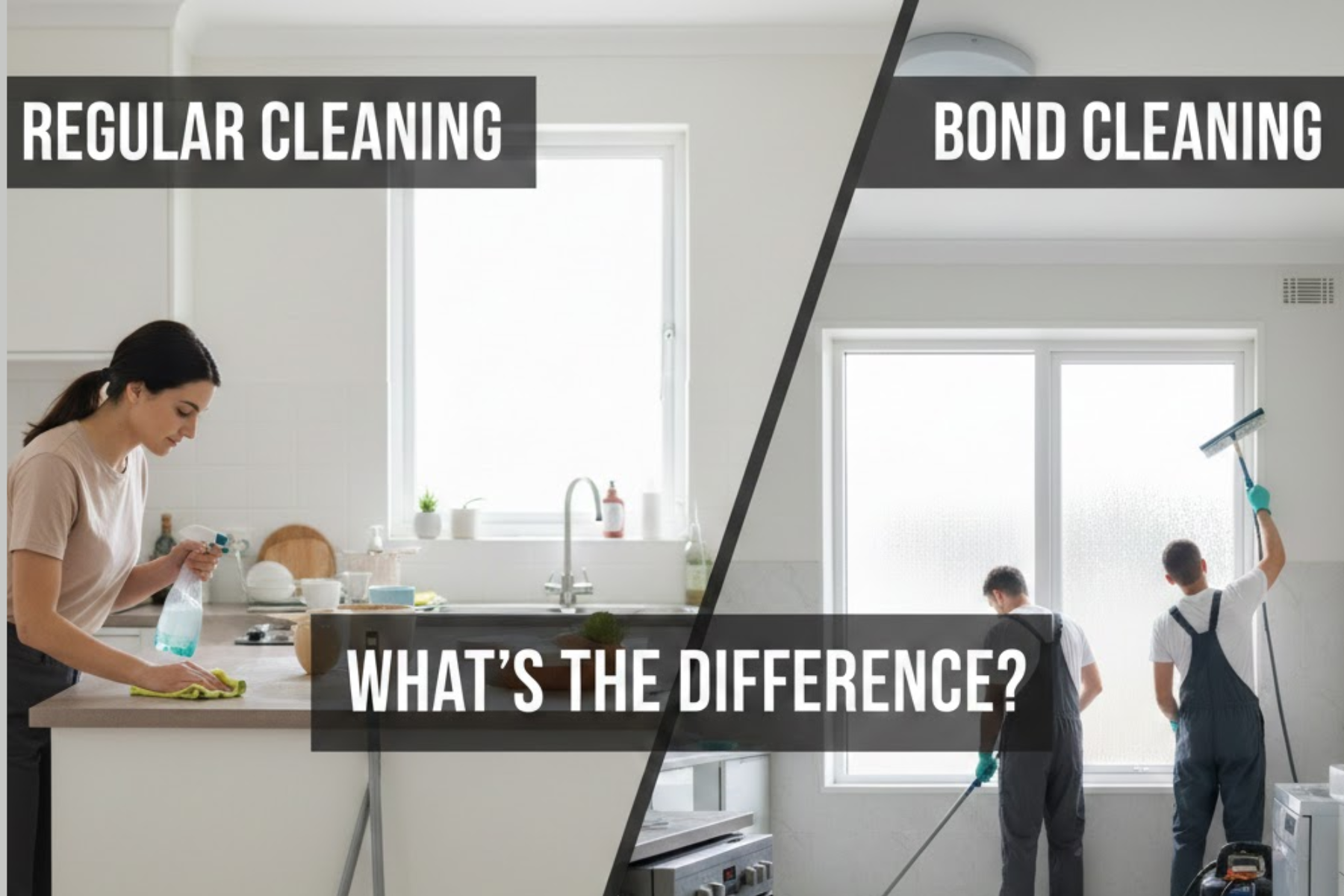
It is not something that words would give you, but only your conditions will dictate the right choice.
Choose Bond Cleaning If:
- You are relocating from a lease property
- Your lease requires professional cleaning
- You are interested in getting a higher bond refund
The inspector does not hold back everywhere.
Choose Regular Cleaning If:
- You are residing in the premises
- You need ongoing maintenance
- There is no inspection involved
- You just want to live somewhere tidy
- When in doubt, look to your lease.
Will keeping the place clean help you pass a bond inspection?
In most cases, no.
The following are not normally part of a routine cleaning:
- Deep oven degreasing
- Carpet steam cleaning
- Wall mark removal
- Window track detailing
- Exhaust fan cleaning
- Inside cupboard cleaning
These areas, in particular, are examined frequently.
A lot of tenants who would advise us that we book a regular clean instead of a bond clean are then paying twice – for the original and re-clean.
Cost Comparison: Bond Cleaning vs Regular Cleaning.
Following the above question is the need for your finances.
Bond cleaning gets a pricier name for good reason.
Why Is It More Expensive?
- Requires more time
- Involves detailed work
- May require multiple cleaners
- Uses specialized equipment
- Often includes carpet steam cleaning
Bond cleans range in price depending on where you’re located and the size of the property, but they are often a lot more expensive than your average 2–3hour regular clean.
Nevertheless, when you consider it against a subject to an episode of forfeited bond deposit, bonding cleaning is actually worth the money.
DIY vs Professional Bond Cleaning
There are tenants who have thought about performing their own bond cleaning to save cash.
DIY Advantages
- Lower upfront cost
- Control over the process
- DIY Disadvantages
- Time-consuming
- Physically demanding
- Risk of missing inspection points
- Possible bond deductions
Professional bond cleaners often:
Follow real estate-approved checklists
- Offer re-clean guarantees
- Provide receipts
- Use industrial equipment
This significantly reduces risk. Professional companies such as Real Bond Cleaning also provide bond-back guarantees, which are sure to give tenants reassurance when the final inspection comes rolling around.
Common Mistakes Tenants Make
- Avoid these common errors:
- Assuming “Clean” Is Enough
- Standards for an inspection are higher than those for daily cleaning.
- Forgetting Hidden Areas
- What’s often overlooked: Cupboards, exhaust fans, and window tracks.
- Skipping Carpet Steam Cleaning
- Many leases explicitly require it.
- Leaving Cleaning Too Late
- Rushing to pick a last-minute service can add stress and debt.
- The Entry Condition Report was Not Checked
Your cleaning needs to be as close to the original of the property.
So, What’s The Difference Between Bond Clean And A Regular Clean?
To put it simply:
So we get asked so often, what is bond cleaning? Bond cleaning is basically a final level of inspection-based service that is necessary when you are moving out. Routine cleaning is maintenance for everyday living.
When you are breaking a lease, bond cleaning is usually the best way to go. If you’re not going anywhere, routine cleaning is fine.
Knowing the distinction guards your time, saves you stress, and ensures you don’t risk part of your bond.
Frequently Asked Questions for Bond Cleaning vs. Regular Cleaning:
Ques. Is bond cleaning mandatory?
Ans.That depends on the terms of your lease. And, of course, you should always endeavour to return the property in the condition you found it – a deeper clean is generally needed.
Ques. How long does a bond clean take to do?
Ans.It generally takes from 6-12+ hours, depending on the size and condition of your property.
Ques. Can I do bond cleaning by myself?
Ans.Yes, but it has to be up to the inspections. Professional worth lowers the probability of deductions.
Ques. Is carpet steam cleaning part of regular cleaning?
Ans. No, you’ll have to do your own steam cleaning of the carpet; it’s usually an extra or a separate service within the bond clean.
Ques. What if the property doesn’t pass inspection?
Ans. If you hired professionals who come with a bond-back guarantee, they should come back and rectify problems. Otherwise, you may have cleaning costs taken from your bond by landlords.